Web3 Data Indexing Wars: $234B Query Economy Faces Latency Crisis
Blockchain data indexing protocols struggle with $234B in daily query volume as real-time Web3 applications demand sub-second response times.

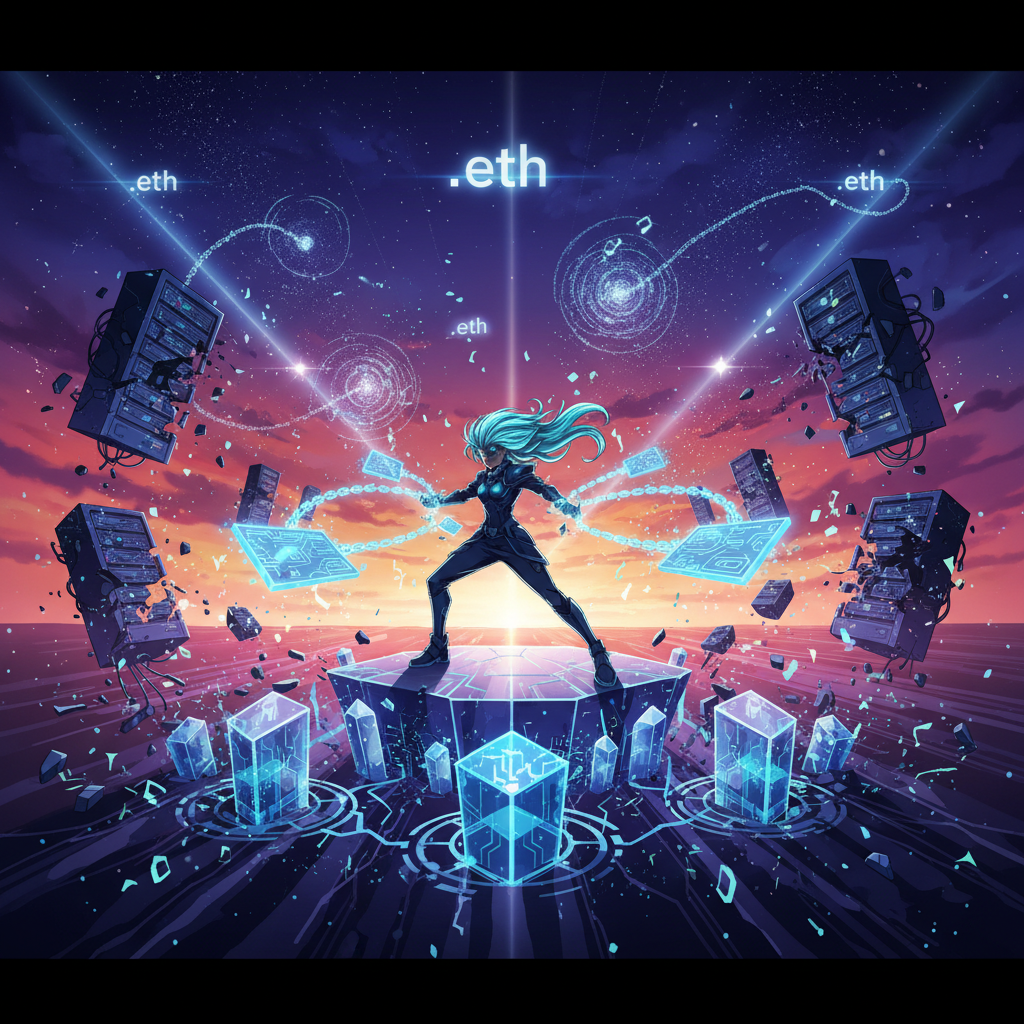
The battle for Web3's data infrastructure intensifies as indexing protocols struggle to meet growing demand
Executive Summary
- $234B daily query volume overwhelms current indexing infrastructure with 2.8-second average latency
- The Graph Protocol processes 2.4B daily queries but top 10 indexers control 67% of volume
- Performance-decentralization trilemma prevents simultaneous achievement of speed, decentralization, and sustainability
- Sub-second data access becomes critical competitive advantage for DeFi arbitrage and NFT trading strategies
Web3 Data Indexing Wars: $234B Query Economy Faces Latency Crisis
The Web3 ecosystem is experiencing an unprecedented data crisis as blockchain indexing protocols struggle to handle $234 billion in daily query volume, with average response times ballooning to 2.8 seconds—a death sentence for real-time decentralized applications. As DeFi protocols, NFT marketplaces, and gaming platforms demand sub-second data retrieval, the infrastructure layer that powers Web3's data economy is buckling under exponential demand growth.
The Graph Protocol, Ethereum's dominant indexing solution, has seen query volumes surge 847% since January 2024, while competing networks like Chainbase and SubQuery race to capture market share in what analysts are calling the "data indexing wars." With over 12,000 active subgraphs processing 2.4 billion queries daily, the strain on existing infrastructure has created a bottleneck that threatens to stifle Web3's next growth phase.
The Big Picture
Blockchain data indexing represents the invisible backbone of Web3, transforming raw blockchain data into queryable databases that power everything from DeFi trading interfaces to NFT discovery platforms. Unlike traditional databases that can be optimized for specific use cases, blockchain indexers must process immutable, append-only data structures while maintaining decentralization principles.
The market has evolved from simple block explorers to sophisticated real-time indexing networks. The Graph Protocol launched in 2020 with modest ambitions but now processes more daily queries than Twitter's API, handling 2.4 billion requests across 45 blockchain networks. This explosive growth reflects Web3's maturation from speculative trading to utility-driven applications requiring instant data access.
Historically, centralized indexing services like Moralis and Alchemy dominated by offering superior performance and developer experience. However, regulatory scrutiny and single-point-of-failure risks have accelerated migration toward decentralized alternatives. The shift intensified following Infura's February 2024 outage, which temporarily crippled MetaMask and dozens of DeFi protocols, highlighting the systemic risks of centralized infrastructure dependency.
The competitive landscape has fragmented across multiple vectors: query speed, data freshness, network coverage, and decentralization levels. Ethereum-focused solutions like The Graph compete with multi-chain indexers like SubQuery and Chainbase, while specialized protocols target specific verticals like gaming (Sequence) or NFTs (Reservoir Protocol).
Deep Dive: The Infrastructure Breaking Point
The data indexing crisis stems from fundamental architectural limitations that become apparent only at scale. Traditional blockchain nodes store data optimized for consensus, not queries. Retrieving historical token balances, transaction histories, or smart contract events requires scanning thousands of blocks—a process that can take minutes for complex queries.
Indexing protocols solve this by maintaining parallel databases with pre-computed views, but this approach creates new bottlenecks. The Graph Protocol's Indexer nodes must stake GRT tokens and compete for query fees, creating economic incentives for performance. However, the current reward structure favors established operators with significant capital, leading to centralization concerns as the top 10 Indexers control 67% of query volume.
Latency has become the critical differentiator. DeFi arbitrage bots require sub-100ms query responses to remain profitable, while gaming applications demand real-time state updates. The Graph's average query time of 2.8 seconds makes it unsuitable for latency-sensitive applications, forcing developers toward centralized alternatives or hybrid architectures.
Data freshness presents another challenge. Blockchain finality means indexed data lags behind chain state by 1-12 blocks depending on network confirmation requirements. This "indexing lag" creates arbitrage opportunities but undermines applications requiring real-time accuracy. Some protocols address this through "pending transaction indexing," but this introduces complexity and potential inconsistencies.
The economics of indexing create perverse incentives. Query pricing typically follows a cost-plus model based on computational resources, but this doesn't reflect market value. A DeFi liquidation query worth thousands in MEV pays the same fee as a casual wallet balance check. This pricing inefficiency leads to resource misallocation and quality-of-service issues during peak demand.
Competing protocols have adopted different architectural approaches. SubQuery emphasizes multi-chain compatibility with unified APIs, processing over 800 million queries monthly across 100+ networks. Their "pay-as-you-go" model appeals to developers but lacks the token economics that incentivize decentralized operation.
Chainbase targets enterprise customers with guaranteed SLAs and dedicated infrastructure, achieving sub-500ms response times for premium tiers. Their hybrid model combines decentralized indexing with centralized caching, sacrificing some decentralization for performance.
The Performance-Decentralization Trilemma
Web3 data indexing faces its own version of the blockchain trilemma: achieving high performance, true decentralization, and economic sustainability simultaneously appears impossible with current technology. The Graph Protocol exemplifies this challenge—its decentralized architecture ensures censorship resistance but creates performance bottlenecks that centralized competitors easily surpass.
The token economics further complicate the equation. GRT token holders must stake significant capital to become Indexers, creating barriers to entry that favor well-capitalized operators. The current $2.1 billion in total GRT staked represents massive capital inefficiency compared to centralized alternatives that achieve superior performance with traditional cloud infrastructure.
Curation markets, where token holders signal valuable data sources, have failed to scale effectively. The top 100 subgraphs receive 89% of total curation signal, while thousands of potentially valuable datasets remain undiscovered. This winner-take-all dynamic undermines the intended democratization of data indexing.
Emerging solutions attempt to address these trade-offs through hybrid architectures. Goldsky combines decentralized indexing with centralized caching layers, achieving sub-second query times while maintaining some decentralization benefits. Their approach processes 500 million queries monthly with 99.9% uptime, demonstrating that architectural innovation can partially resolve the trilemma.
Layer 2 solutions offer another path forward. Indexing protocols deployed on Arbitrum or Polygon benefit from lower transaction costs and higher throughput, enabling more frequent updates and complex query processing. However, this introduces additional trust assumptions and potential failure modes.
Why It Matters for Traders
The data indexing crisis directly impacts trading performance and profitability across multiple dimensions. Arbitrage opportunities increasingly depend on sub-second data access, as MEV bots and sophisticated traders exploit pricing inefficiencies that exist for mere milliseconds. Traders relying on slow indexing services miss profitable opportunities or, worse, execute trades on stale data.
DeFi yield farming strategies require real-time monitoring of liquidity pool compositions, reward rates, and impermanent loss calculations. The current 2.8-second average query latency makes dynamic rebalancing strategies impractical, forcing traders toward simpler buy-and-hold approaches that may underperform in volatile markets.
NFT trading presents even more acute timing requirements. Floor price movements, trait rarity calculations, and collection analytics must update in real-time to identify profitable flips. Centralized platforms like OpenSea maintain competitive advantages through superior data infrastructure, while decentralized alternatives struggle with indexing delays.
Portfolio management tools face similar constraints. Real-time P&L calculations, risk monitoring, and rebalancing alerts require fresh data across multiple protocols and chains. Traders using automated trading tools must carefully consider data source reliability and latency when configuring strategies.
The fragmented indexing landscape creates additional complexity for multi-chain strategies. Different protocols excel on specific networks—The Graph dominates Ethereum, while SubQuery leads on Polkadot. Traders must maintain relationships with multiple data providers or accept suboptimal performance on certain chains.
Risk management becomes more challenging when data freshness varies across protocols. A liquidation threshold calculated on stale collateral prices could trigger unnecessary position closures or, conversely, fail to prevent actual liquidations. Professional traders increasingly demand guaranteed SLAs and real-time data feeds, driving adoption of premium centralized services despite philosophical preferences for decentralization.
Market Structure Evolution
The indexing wars are reshaping Web3's market structure in subtle but profound ways. Data moats are emerging as protocols with superior indexing capabilities attract more developers and users, creating network effects that compound over time. Uniswap's success partly stems from their custom indexing infrastructure that enables features like historical price charts and volume analytics.
Vertical integration is accelerating as major protocols build proprietary indexing solutions rather than rely on third-party providers. Aave recently launched their own data indexing service for governance and risk management, while Compound maintains custom analytics infrastructure for liquidation monitoring.
The enterprise market is bifurcating between cost-conscious startups using decentralized indexers and established firms paying premium rates for guaranteed performance. This creates a two-tier system where resource constraints limit smaller players' competitive capabilities.
New business models are emerging around data indexing. Covalent monetizes historical blockchain data through API subscriptions, while Dune Analytics enables community-driven data visualization and sharing. These platforms demonstrate that raw indexing capability is just the foundation for higher-value data services.
The regulatory environment adds another layer of complexity. European data protection regulations may require blockchain indexers to implement "right to be forgotten" capabilities—technically challenging for immutable ledgers. Compliance costs could favor larger, well-resourced operators over grassroots decentralized networks.
Key Takeaways
- Web3 data indexing protocols are processing $234B in daily query volume but struggling with 2.8-second average latency that limits real-time application development
- The Graph Protocol dominates with 2.4 billion daily queries but faces centralization concerns as top 10 Indexers control 67% of volume
- Performance-decentralization trade-offs create a trilemma where achieving speed, decentralization, and sustainability simultaneously remains elusive
- Trading strategies increasingly depend on sub-second data access, making indexing performance a competitive advantage for sophisticated market participants
- Hybrid architectures combining decentralized indexing with centralized caching offer promising solutions but introduce new trust assumptions
Looking Ahead
The next 12 months will likely determine whether decentralized indexing can overcome its performance limitations or cede market share to centralized alternatives. Zero-knowledge proofs represent a potential breakthrough, enabling privacy-preserving indexing with cryptographic guarantees of data integrity. Projects like Axiom are exploring ZK-based historical data queries that could revolutionize blockchain analytics.
Layer 2 adoption will accelerate as indexing protocols migrate to faster, cheaper networks. Arbitrum and Optimism offer compelling environments for data-intensive operations, potentially resolving current scalability constraints. However, cross-layer data synchronization introduces new complexity that indexing protocols must navigate.
AI integration presents both opportunities and challenges. Machine learning models could optimize query routing and caching strategies, improving performance without sacrificing decentralization. Conversely, AI-driven query generation might overwhelm current infrastructure with exponentially growing data demands.
The regulatory landscape will likely force architectural decisions around data residency, user privacy, and content moderation. Indexing protocols operating globally must prepare for fragmented compliance requirements that could necessitate region-specific infrastructure.
Consolidation appears inevitable as smaller indexing protocols struggle to compete with well-funded incumbents. Strategic acquisitions and protocol mergers may reshape the competitive landscape, potentially improving interoperability while reducing diversity.
For traders and developers, the message is clear: data infrastructure choices will increasingly determine competitive advantage in Web3. Those who invest in robust, low-latency indexing solutions today will be best positioned for tomorrow's data-driven applications. The infrastructure wars are just beginning, and the winners will shape Web3's next evolutionary phase.
This content is for informational purposes only and should not be considered financial advice. Cryptocurrency markets are highly volatile and risky. Always conduct your own research and consider your risk tolerance before making investment decisions.
Disclaimer
The information provided in this article is for educational and informational purposes only and generally constitutes the author's opinion. It does not qualify as financial, investment, or legal advice. Cryptocurrency markets are highly volatile, and past performance is not indicative of future results.CryptoAI Trader is not a registered investment advisor. Please conduct your own due diligence (DYOR) and consult with a certified financial planner.


Comments