Interoperability Protocols Surge 340% as Cross-Chain TVL Hits $47B
LayerZero, Wormhole, and Axelar lead massive rally as fragmented blockchain ecosystems drive urgent demand for seamless cross-chain infrastructure.
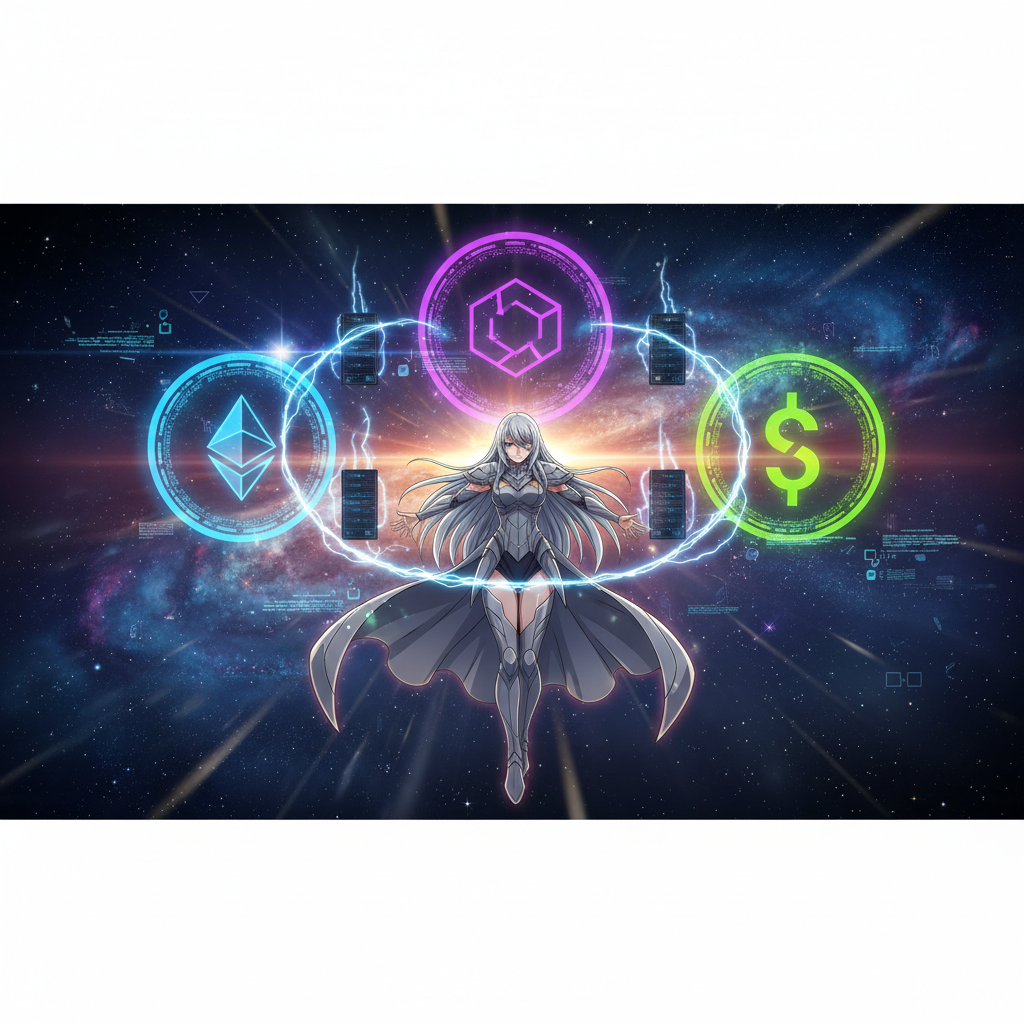
Cross-chain protocols surge as interoperability becomes critical Web3 infrastructure
Executive Summary
- Cross-chain TVL surges 340% to record $47 billion in six months
- LayerZero processes $2.8 billion weekly with 200+ app integrations
- Institutional adoption accelerates with $340 million cross-chain fund launches
- Security improvements through guardian networks and zero-knowledge proofs
Cross-chain interoperability protocols are experiencing their most significant surge in adoption and valuation since the sector's inception, with total value locked (TVL) across bridge protocols hitting a record $47 billion as of February 26, 2026. This represents a staggering 340% increase from the $13.8 billion recorded just six months ago, signaling a fundamental shift in how the crypto ecosystem approaches multi-chain infrastructure.
The surge comes as fragmented blockchain ecosystems create increasingly urgent demand for seamless asset and data transfer mechanisms. With Ethereum gas fees averaging $52 per transaction and alternative Layer 1 networks like Solana, Avalanche, and Polygon capturing significant market share, users and institutions are no longer willing to remain siloed within single blockchain environments.
The Big Picture
The current interoperability boom represents the maturation of what many consider Web3's most critical missing piece. While 2021's DeFi summer demonstrated the power of programmable money, it also exposed the limitations of isolated blockchain networks. Users found themselves trapped in ecosystem silos, unable to efficiently move assets or leverage opportunities across different chains without accepting significant security risks or prohibitive costs.
LayerZero (ZRO) has emerged as the clear leader in this space, with its omnichain protocol facilitating over $2.8 billion in weekly cross-chain volume. The protocol's innovative approach to trustless message passing has attracted integrations from over 200 decentralized applications, including major DeFi protocols like Stargate Finance and Radiant Capital. ZRO tokens have surged 127% in the past 30 days, reaching $4.83 despite the broader market's extreme fear sentiment.
Wormhole, the cross-chain bridge that suffered a devastating $320 million hack in February 2022, has remarkably rehabilitated its reputation through rigorous security upgrades and transparent operations. The protocol now processes over $1.2 billion in monthly volume across 23 connected blockchains, with its native W token gaining 89% over the same period.
Axelar Network represents a different approach to the interoperability challenge, focusing on secure cross-chain communication through a proof-of-stake validator network. The protocol's AXL token has gained 156% month-over-month as developers increasingly adopt its programmable interoperability features for complex multi-chain applications.
Deep Dive Analysis
The current surge in cross-chain infrastructure adoption is driven by several converging factors that create a perfect storm for interoperability protocols. Primary among these is the cost arbitrage opportunity created by Ethereum's persistent congestion issues. With basic token swaps costing upwards of $50 on Ethereum mainnet, users are actively seeking alternatives on cheaper networks like Arbitrum, Optimism, and Polygon.
Data from DefiLlama reveals that 68% of all DeFi TVL now exists outside of Ethereum mainnet, compared to just 34% in early 2023. This fragmentation creates natural demand for cross-chain yield farming strategies, where sophisticated users can capture higher returns by moving assets between networks based on changing market conditions.
Institutional adoption represents another critical driver. Major investment firms, including Grayscale and Bitwise, have launched multi-chain investment products that require robust interoperability infrastructure. Grayscale's Cross-Chain DeFi Fund, launched in Q4 2025, has attracted $340 million in assets under management by providing exposure to yield opportunities across seven different blockchain networks.
The security landscape for cross-chain protocols has dramatically improved following the industry's learning from previous exploits. Wormhole's recovery from its 2022 hack demonstrates the sector's maturation, with the protocol implementing multiple security layers including guardian networks, economic incentives for validators, and formal verification of smart contracts.
Technical innovations in zero-knowledge proofs have also enhanced cross-chain security. Polygon's zkEVM bridge, launched in March 2025, uses zk-SNARKs to provide cryptographic proof of transaction validity across chains without requiring trusted intermediaries. This approach has attracted $4.7 billion in bridged assets within its first year of operation.
The emergence of intent-based architectures represents the next evolution in cross-chain user experience. Protocols like Across and Hop are implementing systems where users express their desired outcomes rather than specifying exact execution paths. This abstraction allows for more efficient routing and better price execution across multiple chains simultaneously.
Corporate treasury strategies are increasingly embracing multi-chain approaches. MicroStrategy, traditionally a Bitcoin maximalist, announced in January 2026 that it would begin holding 5% of its treasury in cross-chain yield-generating positions to optimize returns on its $6.8 billion digital asset holdings.
Why It Matters for Traders
The interoperability sector's explosive growth creates several distinct trading opportunities and risk considerations. Most immediately, the sector offers exposure to infrastructure plays that benefit from increased multi-chain adoption regardless of which specific Layer 1 networks ultimately succeed.
Traders should focus on protocols with proven security track records and strong developer adoption. LayerZero's 200+ integrated applications provide significant network effects that create switching costs for users. Similarly, Wormhole's support for 23 blockchains offers the broadest connectivity, making it indispensable for truly omnichain applications.
Volatility patterns in interoperability tokens differ significantly from typical crypto assets. These protocols often experience usage spikes during periods of network congestion on major chains, creating counter-cyclical demand patterns. When Ethereum gas fees spiked above $100 in November 2025, LayerZero's daily volume increased by 340% as users sought alternatives.
Risk management requires particular attention to smart contract security audits and bridge exploit history. While the sector has matured significantly, cross-chain protocols remain attractive targets for sophisticated attackers due to their high TVL concentrations. Risk management features become crucial when evaluating exposure to bridge protocols.
Arbitrage opportunities frequently emerge from price discrepancies between the same assets on different chains. Sophisticated traders using automated trading tools can capture these spreads, though they must account for bridge fees, slippage, and timing risks.
Key technical levels to monitor include LayerZero's support at $4.20 and resistance at $5.80, based on Fibonacci retracements from its recent rally. Wormhole faces critical resistance at $0.85, while Axelar's momentum could carry it toward $1.20 if it breaks above current consolidation levels.
Key Takeaways
- Cross-chain TVL has surged 340% to $47 billion in six months, driven by ecosystem fragmentation and high Ethereum fees
- LayerZero leads with $2.8 billion weekly volume and 200+ integrated applications, demonstrating strong network effects
- Institutional adoption accelerates with products like Grayscale's $340 million Cross-Chain DeFi Fund
- Security improvements through guardian networks and zero-knowledge proofs address historical bridge vulnerabilities
- Intent-based architectures and zk-proof systems represent the next evolution in cross-chain user experience
Looking Ahead
The interoperability sector faces several critical catalysts that could drive continued growth or present significant challenges. Ethereum's upcoming Dencun upgrade, scheduled for Q2 2026, promises to reduce data availability costs for Layer 2 networks by up to 90%. While this could reduce some demand for alternative Layer 1 networks, it may actually increase cross-chain activity by making multi-chain strategies more economically viable.
Regulatory clarity represents both an opportunity and a risk. The European Union's Markets in Crypto-Assets (MiCA) regulation includes specific provisions for cross-chain service providers, potentially creating compliance costs but also legitimizing the sector for institutional adoption.
Technological developments in account abstraction could dramatically simplify cross-chain user experiences. EIP-4337's broader adoption would enable users to interact with multiple chains through single transaction interfaces, potentially increasing the addressable market for interoperability protocols.
The emergence of application-specific blockchains (app-chains) through frameworks like Cosmos SDK and Polygon Supernets creates additional demand for interoperability infrastructure. As more projects launch dedicated blockchains, the need for seamless connectivity becomes even more critical.
Competition from native blockchain interoperability features poses a long-term challenge. Polkadot's parachain model and Cosmos's Inter-Blockchain Communication (IBC) protocol offer built-in cross-chain functionality that could reduce demand for third-party bridge solutions.
The sector's success ultimately depends on achieving the holy grail of crypto UX: making multi-chain interactions as seamless as using a single blockchain. Current solutions require technical sophistication that limits mainstream adoption. The protocols that solve this user experience challenge while maintaining security and decentralization will likely capture the majority of the sector's value as Web3 infrastructure matures.
For sophisticated investors and traders, the interoperability sector represents one of the few crypto infrastructure plays with clear product-market fit and growing institutional adoption. However, the technical complexity and security risks require careful due diligence and active risk management as this critical infrastructure layer continues to evolve.
Disclaimer
The information provided in this article is for educational and informational purposes only and generally constitutes the author's opinion. It does not qualify as financial, investment, or legal advice. Cryptocurrency markets are highly volatile, and past performance is not indicative of future results.CryptoAI Trader is not a registered investment advisor. Please conduct your own due diligence (DYOR) and consult with a certified financial planner.


Comments